
Alltech Blog
A wireless bridge between two buildings: when should you consider one?
An annex, workshop or neighbouring building to be connected: understand the role of a radio link and the points to check on site.
Topic year 2026
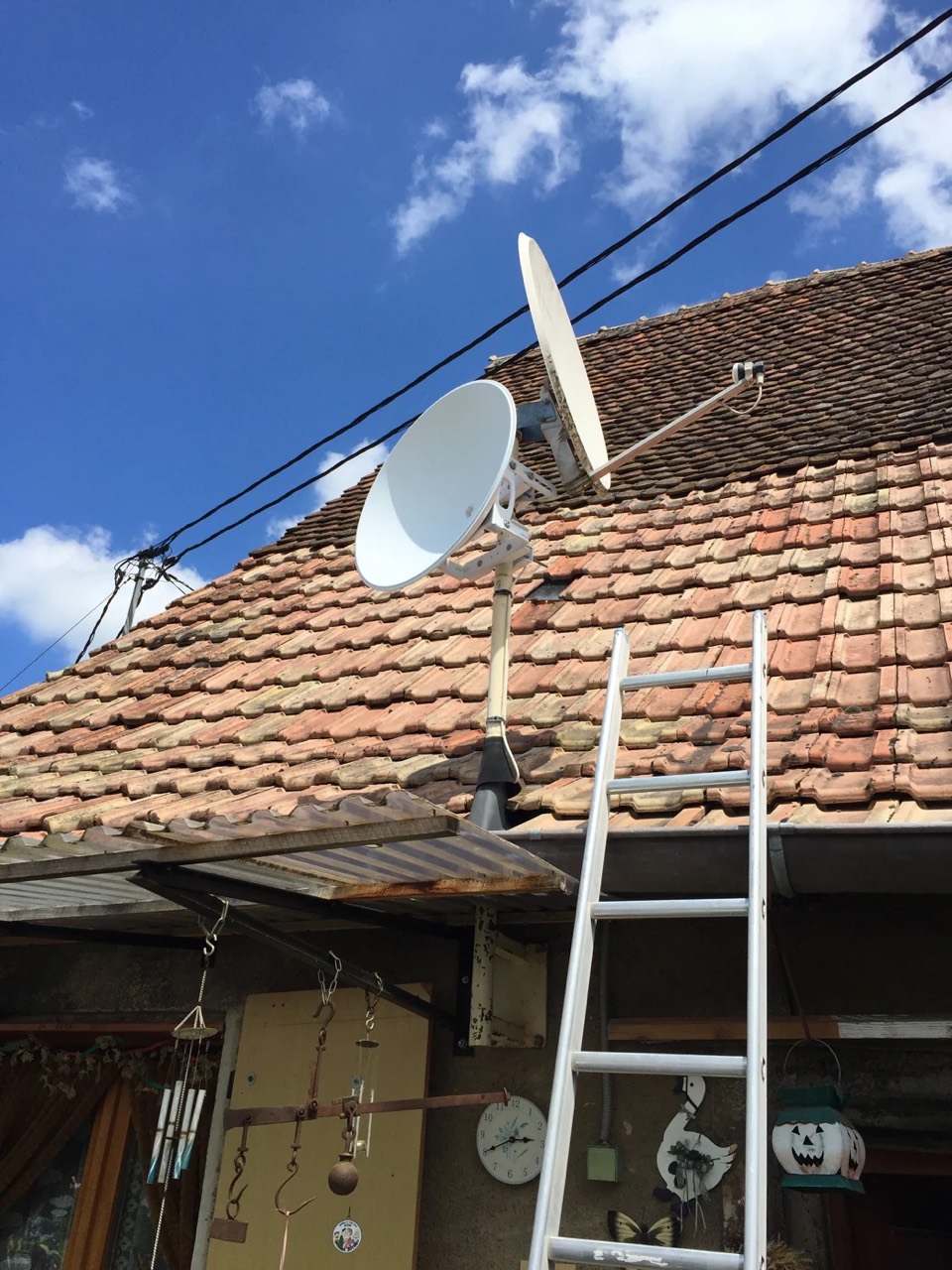
A round device on a roof does not necessarily receive satellite television. The photograph in this article shows a Wi-Fi bridge: a radio link carrying network traffic between separate locations. Its purpose must be established before describing it as a television antenna or satellite dish.
Connecting a network to an annex
The requirement may be to connect a workshop, an outbuilding or another building to the existing network. Where running cable or fibre is difficult, a radio link may be one option to compare. Ubiquiti offers bridges for these uses. This product range illustrates the principle; it does not identify the model in the photograph. Discover the principle of network bridges.
Start with both ends
Identify where the network connection starts and where it needs to reach. Photographs from both ends, an approximate distance and the intended use provide a starting point. The installation locations must then be examined on site, including obstacles, access for installation and cable routes in each building.
Visibility and radio propagation need to be assessed for the chosen frequency and equipment. For example, Ubiquiti’s Building Bridge documentation describes the directional nature of 60 GHz and the effects of obstacles and rain. These specifications are an example, not an identification of the bridge in our photograph. See this example of technical documentation.
Specify what should work on arrival
Connecting an outbuilding and providing Wi-Fi for its occupants are separate functions to plan. Specify the devices to be connected, their number and their intended uses. Local network access, separation between services and administration should also be discussed with the site manager.
Compare before choosing
Alltech can examine the available connections, cabling, mounting points and equipment. The decision should consider maintenance and acceptance tests as well as initial installation. A product specification’s range or speed cannot replace a study of the actual link.